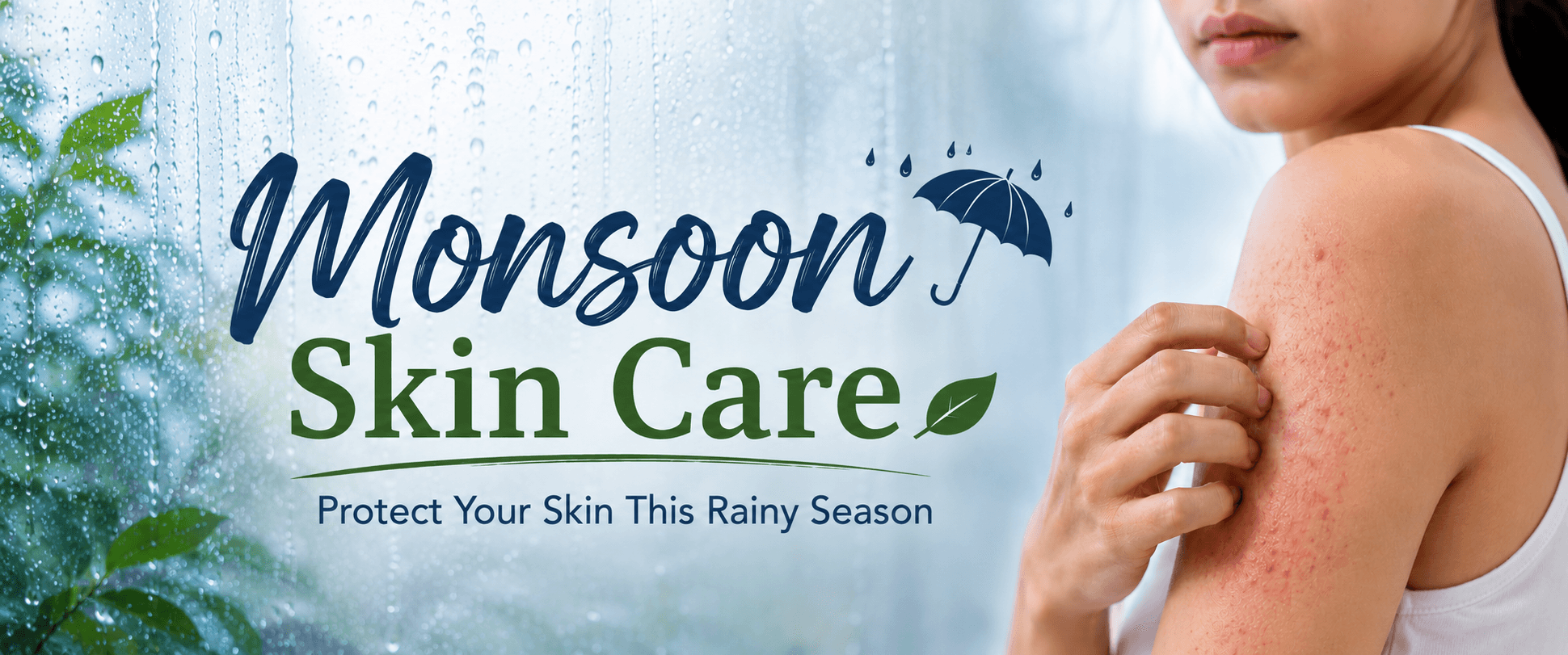
The monsoons are incredibly romanticized. We think of lush greenery, a hot cup of tea, and cooling breezes. Real joy, unfortunately not just for you but also the fungi on your skin ! The monsoon is essentially a three-month-long party for fungi on your skin and a stress test for your skin and hair !
The cool breeze, refreshing showers, and lush greenery make it one of the most loved seasons of the year. However, while the rains rejuvenate nature, they can also create the perfect conditions for a range of skin problems.
The combination of high humidity, excessive sweating, damp clothing, and exposure to contaminated water can weaken the skin’s natural protective barrier, making it more vulnerable to bacterial, fungal, and allergic skin conditions. Understanding how the monsoon affects your skin can help you take the right precautions and maintain healthy skin throughout the season.
Why Does Your Skin Struggle During the Monsoon?
During the rainy season, humidity levels rise significantly. This causes the skin to alternate between becoming excessively oily and unusually dry. Increased moisture in the environment leads to more sweating and sebum (oil) production, while constant exposure to damp conditions creates an ideal breeding ground for bacteria and fungi.
When sweat, dirt, and oil accumulate on the skin, pores become clogged, leading to breakouts and infections. At the same time, prolonged exposure to moisture can weaken the skin barrier, making it more sensitive to allergens and irritants.
Common Monsoon Skin Diseases to Watch Out For
Folliculitis
Folliculitis is an infection or inflammation of the hair follicles, often caused by bacteria or fungi. It appears as red, swollen bumps that may contain pus and can be itchy or painful.
Commonly affected areas: Upper back, arms, thighs, and areas prone to sweating.
Prevention Tips:
- Maintain good personal hygiene.
- Shower after excessive sweating.
- Avoid tight-fitting clothes that trap moisture.
- Use antibacterial cleansers if recommended by your dermatologist.
Athlete’s Foot and ringworm
Athlete’s foot and ringworm infections are one of the most common fungal infections during the monsoon. They are caused by a group of fungi called dermatophytosis which thrives in warm, moist environments.
Athlete’s foot
Symptoms:
- Itching and burning sensation
- Cracked or peeling skin
- Redness and scaling
People with diabetes should be especially cautious, as foot infections can lead to serious complications.
Prevention Tips:
- Keep feet clean and dry.
- Change socks daily.
- Avoid wearing wet shoes.
- Use antifungal foot powders when necessary.
Ringworm
Despite its name, ringworm is a fungal infection, not a worm infestation. It presents as circular, red, itchy patches with a raised border and can spread rapidly through direct contact or shared personal items.
Commonly affected areas: Arms, neck, groin, scalp, and body folds.
Prevention Tips:
- Avoid sharing towels, clothing, or combs.
- Keep skin dry and clean.
- Seek treatment early to prevent spread.
Eczema and psoriasis
For individuals with sensitive skin, monsoon humidity can trigger flare-ups of eczema and dermatitis. These conditions cause redness, dryness, itching, and inflammation.
Exposure to materials like rainwear can also trigger contact dermatitis in susceptible patients
The monsoons are also associated with flares of some conditions like psoriasis.
Prevention Tips:
- Use fragrance-free moisturizers.
- Wear soft cotton clothing.
- Change out of wet clothes as soon as possible
- Wear breathable rainwear
- Avoid strong soaps and detergents.
- Keep the skin hydrated.
Acne
Monsoon weather often worsens acne, especially in people with oily skin. Excessive oil production, combined with dirt and sweat, clogs pores and encourages bacterial growth.
Prevention Tips:
- Wash your face twice daily with a gentle cleanser.
- Avoid heavy creams and oily cosmetics.
- Use non-comedogenic moisturizers and sunscreen.
- Do not touch or squeeze pimples.
Scalp and Hair Problems During Monsoon
The scalp is equally affected by increased humidity. Damp hair and excess sweat can lead to dandruff, itching, fungal infections, and hair fall.
We all have our bad hair days, more so during the monsoons when the hairs tend to be at their worst behaviour. A healthy strand of hair can absorb up to 30% of its own weight in water. During the monsoon, your hair is essentially acting like a microscopic sponge, which explains why you leave the house with a sleek blowout and arrive looking like a slightly startled poodle.
Prevention Tips:
- Wash Away the Rainwater: Rainwater is not the pure, pristine shower Mother Nature intended. It is often mildly acidic and loaded with atmospheric pollutants. If you get soaked, wash your hair with a gentle shampoo as soon as you get home to prevent scalp irritation.
- Evict the Malassezia: The monsoon is peak season for seborrheic dermatitis and dandruff flares because the yeast Malassezia loves a sweaty, humid scalp. Don't leave heavy hair oils on overnight, as this just provides a buffet for the yeast. Use a targeted anti-dandruff shampoo containing ketoconazole or zinc pyrithione if flaking starts.
- Condition Smartly: Frizz happens because dry hair aggressively absorbs excess moisture from the humid air, causing the hair shaft to swell. Use a good wash-off conditioner applied only to the lengths and ends, and consider a light anti-frizz serum to seal the cuticle.
Effective Tips to Prevent Monsoon Skin Diseases
Maintaining a consistent skincare routine can significantly reduce your risk of developing skin problems during the rainy season.
Do Dry Your Skin Thoroughly; Don't Stay in Damp Clothes
Do dry your toes, underarms, and skin folds thoroughly after bathing or sweating, as these areas are particularly prone to moisture accumulation.
Don't sit around in damp gym clothes, wet socks, or rain-soaked denim. Dermatophytes (fungi) thrive in warm, dark, and moist environments, and damp clothing creates the perfect conditions for fungal infections such as tinea cruris (jock itch) and athlete's foot.
Do Use Lightweight Moisturizers; Don't Continue Using Heavy Winter Creams
Do switch to lightweight, non-comedogenic gel-based moisturizers or products containing hyaluronic acid to maintain hydration without clogging pores.
Don't continue using the heavy, occlusive creams you relied on during winter. High humidity naturally reduces transepidermal water loss (TEWL), and applying thick creams on top of that can trap sweat and sebum, increasing the likelihood of acne breakouts.
Do Wash Your Scalp Regularly; Don't Leave Heavy Oils Overnight
Do cleanse your scalp regularly and use an anti-dandruff shampoo when necessary to keep dandruff under control during the rainy season.
Don't "marinate" your scalp in heavy oils overnight in the hope of controlling frizz. The monsoon creates an ideal environment for Malassezia, the yeast responsible for dandruff, and prolonged oil exposure can encourage its growth and worsen the problem.
Do Apply Sunscreen Every Morning; Don't Assume Cloudy Skies Mean Protection
Do apply a broad-spectrum sunscreen generously every morning, regardless of whether the sun is visible.
Don't let dark, gloomy skies fool you into skipping sun protection. UVA rays can penetrate cloud cover and continue to break down collagen, contributing to premature ageing and long-term skin damage.
Do Exfoliate Gently; Don't Scrub Your Skin Aggressively
Do use gentle chemical exfoliants, such as salicylic acid, once or twice a week to help keep pores clear and maintain healthy skin.
Don't aggressively scrub your face with harsh physical exfoliants to remove the sticky feeling caused by humidity. Excessive scrubbing can damage the skin barrier, cause inflammation, and paradoxically trigger increased oil production.
Do's
- Wear loose, breathable cotton clothing.
- Bathe immediately after getting drenched in rain.
- Keep skin folds and feet dry.
- Use lightweight, non-greasy moisturizers.
- Stay hydrated throughout the day.
- Apply sunscreen even on cloudy days.
- Use antifungal powders if prone to fungal infections.
- Eat a balanced diet rich in fruits and antioxidants.
- Change into dry clothes promptly after getting wet.
Don'ts
- Don't wear damp clothes or socks for prolonged periods.
- Don't walk barefoot in wet areas.
- Don't share towels, footwear, or personal items.
- Don't use harsh soaps or aggressive scrubs.
- Don't self-medicate skin infections.
- Don't ignore persistent itching, rashes, or unusual skin changes.
When Should You See a Dermatologist?
Simply put, if you feel things are not right, better to get it checked by your dermatologist. While many monsoon-related skin problems can be managed with proper care and hygiene, professional medical attention may be necessary if symptoms persist. Early diagnosis and treatment can prevent complications and ensure faster recovery.
Healthy Skin Through the Monsoon
Monsoon may be a refreshing season, but it also creates ideal conditions for several skin concerns, ranging from fungal infections and acne to eczema and allergies. The good news is that most of these problems are preventable with proper hygiene, breathable clothing, regular cleansing, and timely medical attention when needed.
Enjoy the monsoons!! But do keep the rains outside, the hot tea in your cup, and the wetness and humidity far away from your skin and hair!!!
Related Blogs
Abdominoplasty
Learn more
Blood
Learn more
Thyroid
Learn more
Autism

Causes of Infertility
Learn more
Kawasaki Disease? A Guide to Diagnosis and Treatment

Multisystem Inflammatory Syndrome In Children