
India, and particularly Kerala, is steadily emerging as a formidable force on the global healthcare map. For decades, Kerala’s tourism industry has attracted visitors from around the world through its natural beauty, hospitality, and wellness traditions. A significant number of international health and wellness travellers have long chosen Kerala for Ayurvedic treatment and rejuvenation programmes, helping the state stand apart from many other healthcare destinations in India.
In recent years, Kerala has also drawn growing attention from international patients who have shared positive experiences of treatment and medical care on social media and other public platforms after visiting the state. A major reason for this recognition is simple economics. Treatment in Kerala is often significantly more affordable than in countries such as the United States, the United Kingdom, and several Gulf nations, while still being delivered through large multispecialty hospitals equipped with modern technology and specialist expertise.
At a time when many patients in advanced economies are facing rising treatment costs, insurance-related complexities, and long waiting periods for specialist care, Kerala is increasingly being viewed as a destination that offers timely, high-quality, and cost-effective treatment. This combination of accessibility and affordability has become one of Kerala’s major strengths in the global medical tourism landscape.
Kerala also benefits from a long-established reputation as one of India’s best-performing states in public health, literacy, hygiene, and preventive care. Over the years, this image has helped build trust among international patients, many of whom view Kerala as a safe, organised, and medically dependable destination.
Today, that trust is gradually extending beyond wellness tourism into the sphere of advanced modern medical care. One of the defining strengths of Kerala’s healthcare ecosystem is the speed and accessibility with which specialist services are available. In many developed healthcare systems, patients often face lengthy referral pathways and waiting periods before consultations or procedures. In contrast, Kerala’s dense network of hospitals and specialists allows many patients to access expert care far more quickly.
Recognised for health indicators that perform strongly relative to its economic profile, Kerala has a life expectancy estimated at around 75 to 77 years and an infant mortality rate comparable to several developed regions. The state’s doctor-to-population ratio is also reported to be well above the national average. At the same time, specialist consultations in Kerala remain comparatively affordable for both domestic and international patients.
Part of the explanation lies in accessibility. Kerala has one of the highest concentrations of hospitals in India, which means advanced medical care is rarely far away. Dr. Zubair Umer Mohamed, Professor of Critical Care at Amrita Hospital, Kochi, spent a decade practising in the United Kingdom before returning to Kerala, giving him a direct basis for comparison.
“Based on my personal experience, I believe the healthcare system in Kerala offers excellent care for individuals,” he says. “In most parts of Kerala, patients can reach a hospital capable of providing advanced medical care within a short time.”
This accessibility also changes the experience of routine and specialist care. Dr. Zubair explains that while patients in some Western healthcare systems may wait weeks or months for specialist appointments, “in Kerala, patients can often see specialists such as cardiologists, neurologists, or other consultants on the same day.” He points to elective procedures as another example: “A good example is knee replacement surgery. In Kerala, if the indicated patient is medically fit, it is often possible to undergo the procedure as early as the next day.”
Dr. Sidharth Viswanathan, Senior Consultant in Vascular and Endovascular Surgery at Amrita Hospital, also trained and worked in the UK before returning to practise in India. Reflecting on the differences in accessibility, he says: “I have had the opportunity to observe how healthcare accessibility differs between the Western healthcare systems, particularly in the UK, and our system in India, especially in Kerala.”
He explains that patients in the UK often move through a structured referral pathway involving a GP consultation, specialist referral, and further waiting periods before procedures are scheduled. “The referral to a specialist consultant in the relevant field can take several weeks or even months,” he says. Even some elective but time-sensitive procedures may face delays.
“In Kerala, patients have the convenience of directly consulting the specialist they require,” he adds, noting that “most procedures or surgeries can usually be scheduled and performed within a couple of weeks.”
The financial contrast is equally striking for many international patients. Procedures such as cardiac surgery, joint replacement, and advanced imaging often cost substantially less in Kerala compared to the United States and several Western countries, even when delivered through accredited tertiary care hospitals with advanced infrastructure.
Dr. Praveena N B, Associate Professor of General Paediatrics at Amrita Hospital, spent three years working in the United States before returning to Kerala in 2017. What she encountered at Amrita Hospital challenged many assumptions about cost and quality.
“When I returned from the United States and joined Amrita Hospital, I noticed many similarities between the work environment here and what I had experienced in the US. The advanced treatment and diagnostic facilities available here were all comparable to what I had seen in the United States,” she says.
“The research and academic facilities here were also on par with what I had experienced abroad.”
“However,” she adds, “the most surprising aspect was that all these facilities are available at a fraction of the cost compared to what patients would pay in the United States or other Western countries.”
She also notes that medication costs in India can be dramatically lower due to the availability of generic medicines and differences in healthcare pricing structures.
Within this landscape, institutions like Amrita Hospital, Kochi represent a model of integrated multidisciplinary care. Dr. Zubair describes one of the hospital’s defining strengths: “At Amrita Hospital, almost every medical and surgical specialty is available under one roof. Doctors work together as a unit, combining the experience and expertise of multiple specialists within the same department.”
For admitted patients, he says, this creates a collaborative environment where “they benefit from the collective experience and clinical judgement of an entire team rather than relying on the opinion of a single doctor.”
Another important factor shaping Kerala’s healthcare sector is the return of internationally trained physicians to Indian practice. Dr. Praveena notes that “rigorous medical training, highly competitive entrance examinations, vast clinical exposure, and the large patient volumes that doctors handle in India make them extremely competent and well-prepared.”
Doctors who have trained in countries such as the UK and the US “bring back this experience and expertise, enabling them to provide care comparable to global standards,” she says. International accreditations such as JCI further reinforce confidence among overseas patients by benchmarking institutions against recognised global standards.
Today, Kerala attracts patients from across the world because of its combination of shorter waiting periods, affordability, specialist expertise, and established healthcare infrastructure. Dr. Sidharth, reflecting on his experience across both systems, says: “In terms of technology, medical expertise, and the quality of care provided, patients in India receive treatment that is on par with healthcare systems in many parts of the Western world.”
As healthcare costs continue to rise globally, India — and Kerala in particular — appear increasingly well positioned to play a larger role in international medical travel. For many patients seeking timely treatment, specialist expertise, and comparatively affordable care, Kerala is gradually evolving beyond a wellness destination into a trusted centre for advanced healthcare and healing.
Related Blogs
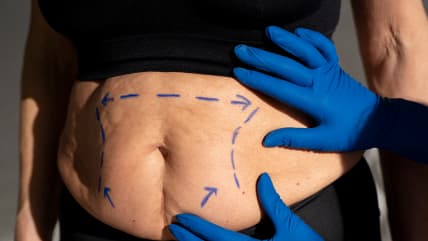
Abdominoplasty
Learn more
Blood
Learn more
Thyroid
Learn more
Autism

Causes of Infertility
Learn more
Kawasaki Disease? A Guide to Diagnosis and Treatment

Multisystem Inflammatory Syndrome In Children