In a significant advancement for epilepsy care, Amrita Hospital has developed and patented an innovative method to accurately pinpoint the origin of seizures in patients with drug-resistant epilepsy. The newly developed technique, which analyses brain scans using the patient’s own brain data, has been scientifically validated and is expected to substantially improve outcomes of epilepsy surgery.
While medications successfully control seizures in most people with epilepsy, nearly 30 per cent continue to experience seizures due to drug-resistant epilepsy—a condition that can severely affect education, employment, independence, and overall quality of life. For many such patients, surgery offers the best chance of long-term seizure freedom, provided the exact area of seizure onset in the brain can be accurately identified.
Traditionally, doctors rely on FDG-PET scans to study brain metabolism and locate seizure-generating regions. However, visual interpretation of these scans can be subjective, and subtle abnormalities are often missed, especially in patients whose MRI scans appear normal. Existing quantitative methods typically compare a patient’s scan with those of healthy individuals, a process that is expensive and not always practical.
To overcome these limitations, clinicians and researchers at Amrita Hospital have developed a novel, patient-specific analytical approach. Instead of external comparisons, the new method compares the left and right sides of the patient’s own brain after precise alignment with MRI data. This allows clinicians to detect small yet clinically meaningful asymmetries in brain activity that may indicate the seizure focus.
The patented technique—named PASCOM (PET Asymmetry after Anatomical Symmetrisation Coregistered to MRI)—has been clinically validated and published in a leading international neurosurgical journal. By offering a more objective, accessible, and precise way to localize seizure onset, PASCOM represents a major step forward in the surgical management of complex epilepsy.
Highlighting the wider impact of the innovation, Dr Siby Gopinath, Professor and Head of the Amrita Advanced Centre for Epilepsy, said, “Beyond its technical contribution, the work has broader implications. By avoiding dependence on expensive or invasive methods, this approach may help make advanced epilepsy surgery planning more accessible, especially for hospitals in resource-constrained settings.”
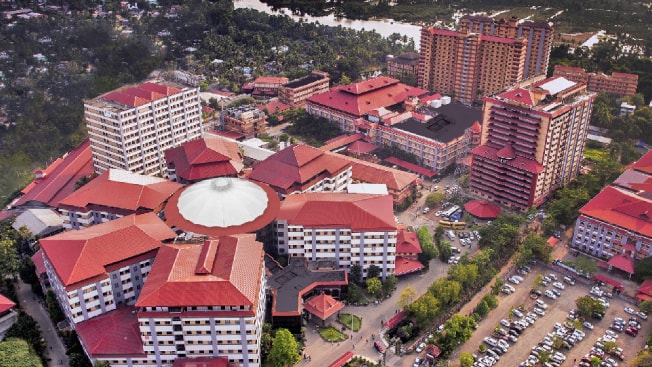
This achievement underscores Amrita Hospital, Kochi’s growing leadership in advanced neuroscience, innovation-driven patient care, and research that directly translates into better clinical outcomes for patients with challenging neurological disorders.